Overview
In enterprise e-commerce and fintech sectors, fraud has evolved from isolated, malicious transactions into highly coordinated attacks executed by syndicates or fraud rings. These networks leverage distributed networks of compromised devices, revolving proxy IPs, and stolen credit cards to bypass static rule engines.
I led the zero-to-one design of the Fraud Ring feature on Antom. The objective was to transform raw, fragmented relational transaction data into an intuitive, actionable workspace for risk analysts to discover, isolate, and neutralise organised fraud syndicates in real time.
OPERATIONAL VOLUME
+30%
cases handled (during pilot test)
YEAR
2025
PLATFORM
Web app
COMPANY

RESPONSIBILITIES
Interaction Design
User Research
Design QA
Solution
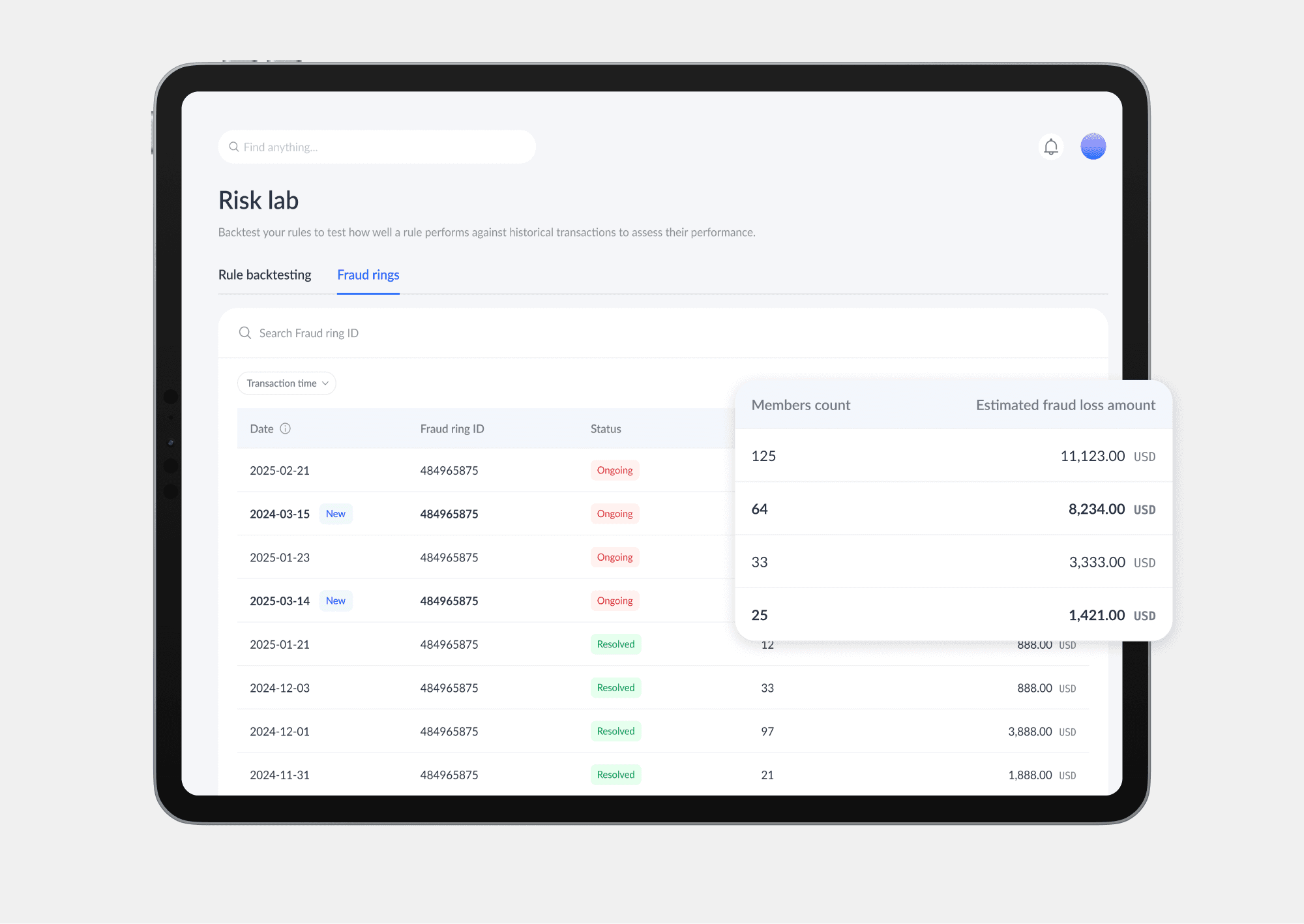
Fraud rings indexing
The fraud rings dashboard sorts fraud rings by size rather than discovery timestamp, so that risk analysts can focus on the high-impact rings first.
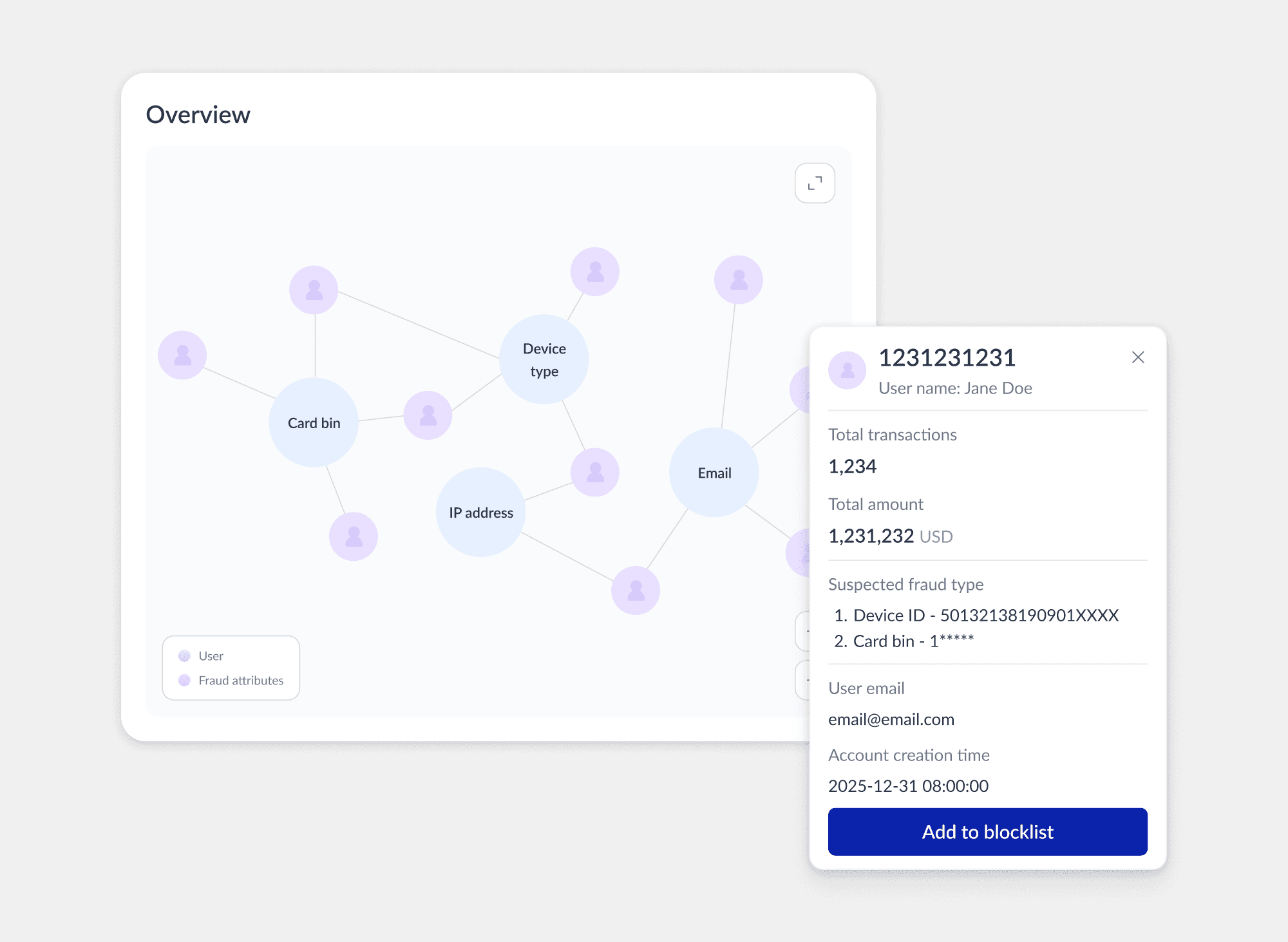
Interactive fraud ring canvas
An interactive network map designed to make structural patterns visible at a glance. To keep things clean, a node only shows more data when an analyst clicks on it.
AI-generated summary
AI synthesises risk characteristics (IP clustering, device sharing, card patterns) into a plain-language brief. It gives analysts the breakdown without requiring them to read raw data.

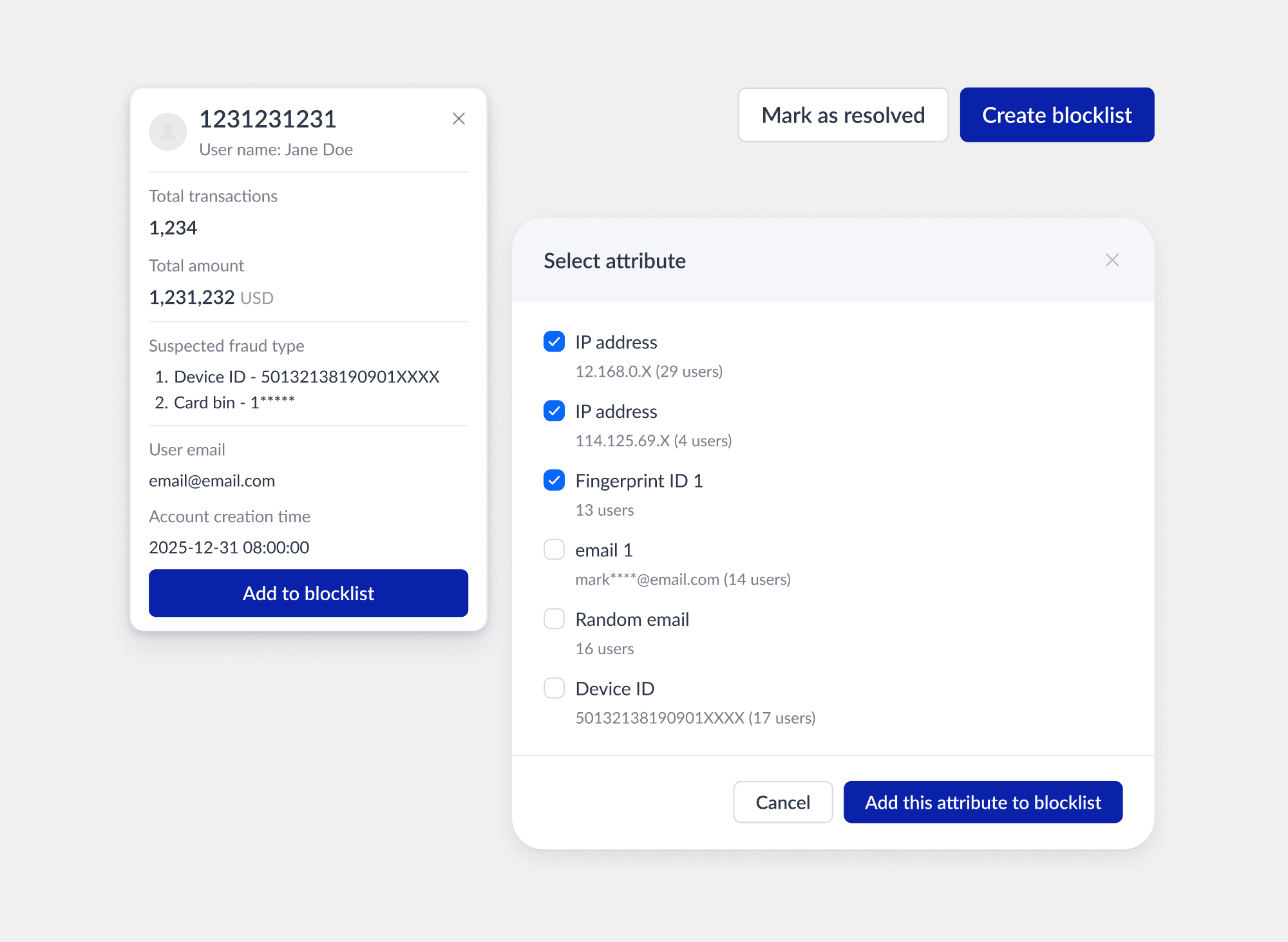
Blacklist & resolution.
The design surfaces blacklisting per medium (per IP, per card, per device), allowing analysts to neutralise entire attack networks instantly while maintaining precise decision-making. A separate marked as resolved button is also added to ensure closure remains a deliberate action, preventing accidental exits.